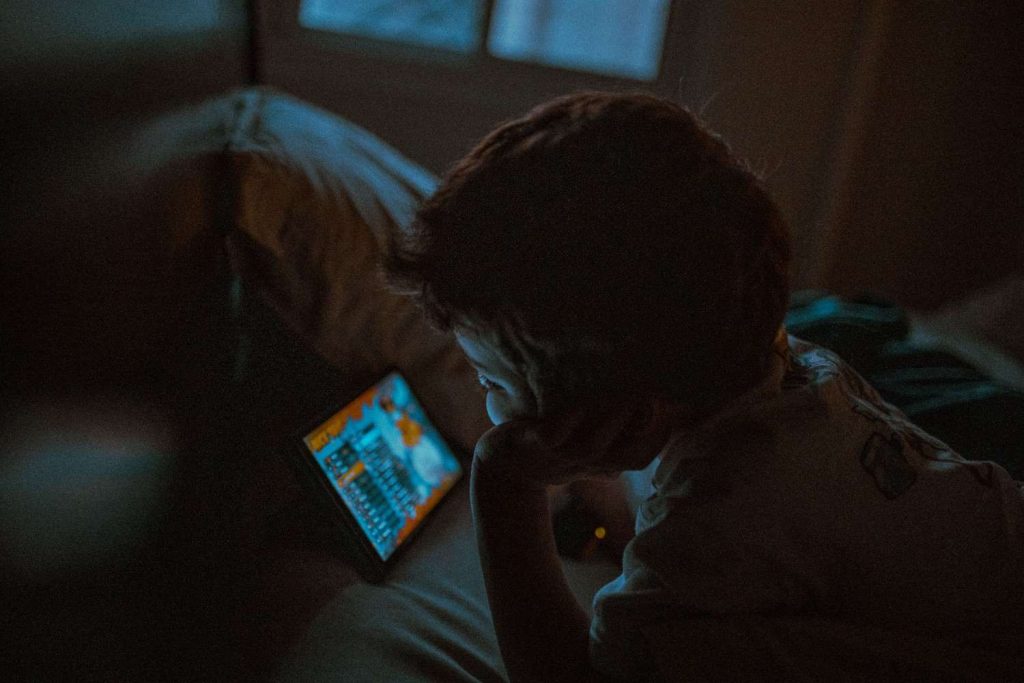


Our children’s world needs to be so much bigger than a tiny, glowing screen. As parents, we all know that heavy sigh of exhaustion at the end of a long day. We want our little ones to be happy, calm, and safe, and in those moments when you just need to breathe, handing over a mobile phone feels like a lifesaver. The cartoons start, the scrolling begins, and finally, there is peace. But during that time, have we ever stopped to look at our children and wonder: what is slipping away while they sit under that digital spell?
The truth is, we aren’t just keeping them occupied; we might unintentionally be replacing the raw, beautiful magic of real-life experiences with a flat, glass wall.
The Heartbeat of True Connection
For any child, and especially for our beautiful children navigating autism or developmental delays, communication isn’t just about hearing a collection of words. True communication is a heartbeat. It is a living, breathing cycle.
Your child looks at you, catches your eye, listens to your voice, processes your warmth, and responds. Then, you smile back, creating a beautiful loop of human connection. Screens don’t smile back, Algorithms don’t hold eye contact, and videos don’t adapt to your child’s unique soul.
Every hour spent absorbed in a virtual world is an hour when they miss the subtle, face-to-face cues that teach them how to relate to humanity. For a child already struggling with speech delays or social interaction, missing these ordinary loops of connection can feel like losing the keys to the world around them.
Trading Screen Time for “Green Time”
A child’s world should be bigger than a mobile phone. A two-year-old needs opportunities to observe the environment, play with other children, visit different places, and learn from everyday experiences. Children develop social understanding by watching people, noticing what happens around them, asking questions, and responding to what they see.
I often remind parents that if screen time increases, opportunities for outdoor exploration may decrease. Children need what I call green time, too. They should experience nature, explore their surroundings, and discover the world beyond a screen.
Think about a child walking on grass, touching soil, exploring sand, feeling the cold or warmth of the environment, or observing leaves and animals. These simple experiences allow children to encounter different sensations and learn how to respond to them.
Sensory Experiences Matter
Many of our children battle deep sensory sensitivities, sometimes rejecting textures or turning away from foods because the world feels overwhelming or scary. Forcing them never works, but gently inviting them into nature does. Letting them explore the earth safely, at their own pace, heals and builds their sensory systems in a way a tablet never could.
Parents can provide appropriate opportunities for children to explore different textures and sensations safely, without forcing them into experiences that cause distress. Walking barefoot on suitable grass, playing with sand, and exploring nature can become simple ways to engage with the environment.
When a Child Seems to Lose Progress
It is one of the most heartbreaking, terrifying moments a parent can face: watching a child who used to speak, look you in the eyes, and answer to their name suddenly seem to drift away or lose those precious skills. Excessive screen exposure may be one factor worth discussing, but regression should never automatically be blamed on screen time alone.
The term virtual autism is sometimes used to describe autism-like developmental difficulties associated with excessive screen exposure. However, excessive screen exposure can mask or worsen developmental difficulties.
Final Thoughts
At the end of the day, a screen can mimic life, but it can never give life. Your child learns who they are by touching the world, getting dirty, making mistakes, and looking up to find your eyes watching them with pride.
Put the phone away for a little while. Sit on the floor. Get your hands dirty in the garden. Let their feet get covered in grass. These messy, ordinary moments might feel small to us, but to your child, they are everything. The most profound thing you can ever give your child isn’t the next viral video it is your time, your undivided attention, and your presence.
We encourage parents to prioritize real-life interaction, outdoor play, and meaningful communication. Reach out to Transformation if you notice developmental delays or a loss of previously acquired skills in your child; seek professional guidance and early assessment.

The Link Between Screen Time and Autism
The Link Between Screen Time and Autism Our children’s world needs to be so much bigger than a tiny, glowing screen. As parents, we all know
When a Child’s Anger Is Trying to Tell Us Something
When a Child’s Anger Is Trying to Tell Us Something Aggression among children is a topic that deserves our attention. As a psychologist, one questionI

Setting Boundaries and Managing Tantrums
Setting Boundaries and Managing Tantrums Every parent wants to see their child happy. A child cries, demands something, throws a tantrum, and the parent eventually
Learning to Silence Negative Self-Talk
Learning to Silence Negative Self-Talk What if the person speaking most harshly to you every day is not someone else, but you? I am not

Dr. Imran Yousuf to Meet Visitors at Health Asia 2026
Karachi, Pakistan — September 2026:* Transformation International is pleased to announce a special opportunity for visitors to meet Dr. Imran Yousuf, Chairman of Transformation International, during Health

Dr. Imran Yousuf Raises Awareness on Social Media and Student Mental Health, at Bahria College Karsaz
Dr. Imran Yousuf delivered an insightful and eye-opening session at Bahria College Karsaz. Raising Awareness About Social Media’s Impact on Student Mental Health The session